Europe Freight Update April 2026: Asia Brief
Rotterdam congestion, the Rubí tunnel closure, Rijeka's EUR 65 fee, and Asia-Europe air reroutes — what Polaris Line is advising SE Asia exporters this month.
Europe’s April 2026 freight picture is uncharacteristically noisy — winter storms lingering into spring, Easter labour gaps, a 5–7 week Rubí tunnel closure on a key Barcelona rail corridor, and a new EUR 65 documentation fee landing overnight in Rijeka. Layered on top is the steady pull of the Middle East situation, which is rewiring ocean, air, and landside economics for anyone shipping between Southeast Asia and Europe.
Maersk’s latest Europe Market Update consolidates the moving pieces in one briefing, and for our clients on the SE Asia–Europe corridor it lines up with what our booking desks have been seeing across February and March. Below is what matters most to Thai and wider SE Asia exporters — the named disruptions, the numbers worth tracking, and the operational responses we are putting in place this month.
Rotterdam and the Western Med are congested
Rotterdam entered April with elevated yard density after storms and strong winds disrupted vessel arrivals and yard operations. The message from Maersk to customers is blunt: pick up import units as soon as possible after discharge to avoid compounding congestion at the terminals.
The Western Mediterranean is in worse shape. Severe winter weather since mid-January has forced repeated terminal closures, driving port congestion and yard density higher. Maersk has rolled out a contingency package on its SAMBA service — targeted port omissions designed to let the rotation absorb delays and recover its schedule. For exporters with cargo destined for Barcelona, Valencia, Algeciras, or Fos, expect some sailings to skip normal calls and require re-routing at the transhipment hub.
What we are telling clients: review booked sailings for any exposure to Western Med omissions this month and flag to your forwarder before loading. If you move through Rotterdam, align with your consignee on faster gate-out windows — letting a container sit adds to yard density and may trigger detention charges we would rather our clients not pay.
Easter weekend labour gaps at German terminals
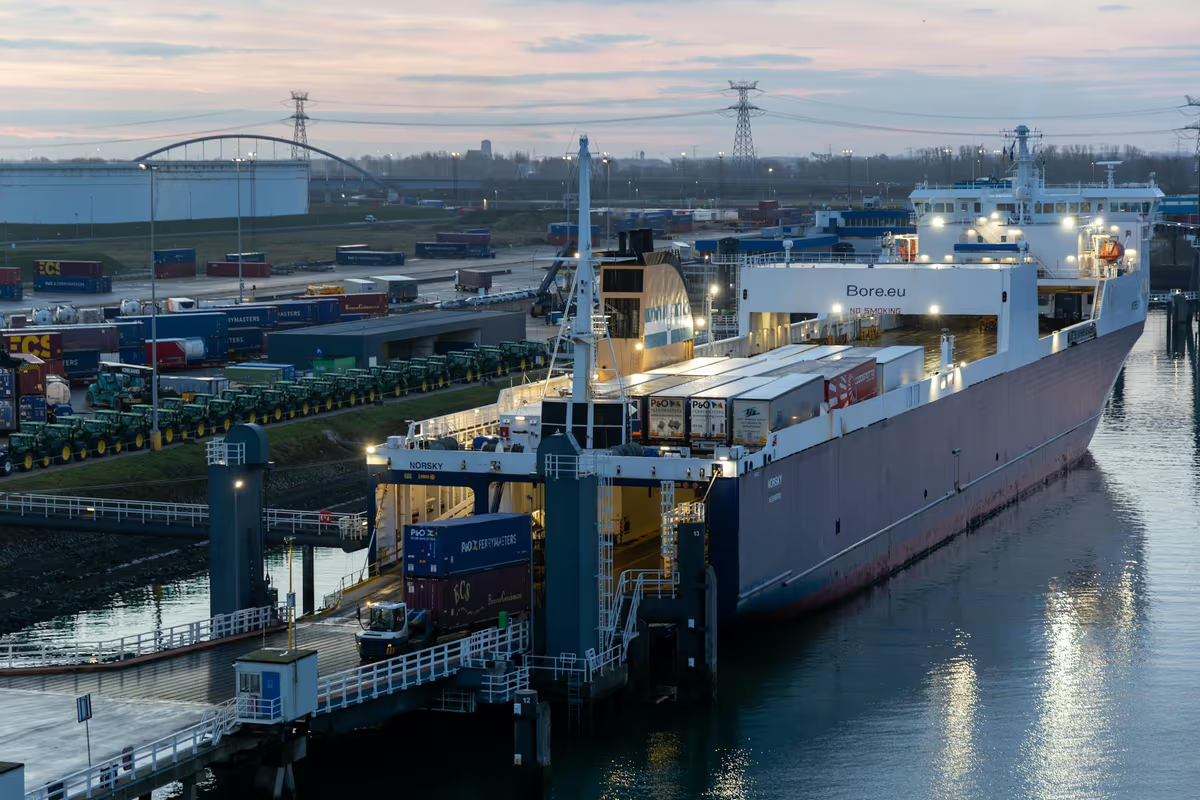
Easter falls in early April, and limited labour availability across German terminals is expected during the holidays. Maersk is coordinating with terminal operators, but exporters with time-sensitive cargo touching Hamburg or Bremerhaven should assume slightly longer dwell times through the first week of April. Our operations team is building that extra 24–48 hours into the plan for every Germany-bound booking until the week after Easter.
Barcelona rail: Rubí tunnel closed 14 March for 5 to 7 weeks
Spanish infrastructure manager ADIF closed the Rubí tunnel — the key structure between Castellbisbal and Rubí — for urgent structural repairs starting 14 March 2026. The outage is expected to last 5 to 7 weeks. As a direct consequence, Maersk has suspended two intermodal rail services in both directions:
- Barcelona to Toulouse (Fenouillet)
- Barcelona to Lyon (Loire-sur-Rhône)
Carriers are working on alternative routings, but for exporters feeding southern-France hinterlands through Barcelona, the default assumption through late April and early May should be no direct rail from the port. Road and mixed barge-road alternatives will be more expensive and slower. We are quoting those alternatives up front rather than waiting for a rail booking to fail.
Rijeka introduces a EUR 65 documentation fee from 16 April
Effective 16 April 2026, Maersk is introducing a new Destination Coordination Fee of EUR 65 per container for shipments discharged in Rijeka bound for Serbia where mandatory documentation is submitted late, incomplete, or incorrect. The Croatian port is a significant inland gateway for the Western Balkans, and Maersk cites late or incorrect paperwork as a growing source of border delays, carrier haulage disruption, and unplanned handling costs.
This is a compliance charge, not a rate increase. Exporters and consignees can avoid it entirely by making sure transit documentation is submitted on time and accurately. For any Thai shipper moving into the Balkans via Adriatic gateways, the message is simple: tighten your document workflow before 16 April. Our customs team is already walking affected clients through the check.
Landside fuel surcharges are rising across Europe
Global energy volatility — amplified by the Middle East situation and its effect on fuel availability — continues to push landside and intermodal costs up across Europe. Maersk’s specific data point: roughly 20 per cent of global fuel moves through the Strait of Hormuz, and current conditions there are reshaping the wider cost environment.
The operational response is temporary, cost-reflective energy and fuel price adjustments on landside transportation in several European countries. Exporters should expect the per-container road and rail leg in Europe to be noticeably more expensive through Q2 than the 2025 baseline. Budget accordingly and revisit CIF-style quotes where the delivered price risk sits with the seller.
The same pressure flows through to bunker markets on the ocean side — a dynamic we covered in our bunker fuel analysis, where Singapore VLSFO cleared USD 988 per tonne in March.
Air freight Asia to Europe: reroute, don’t cancel
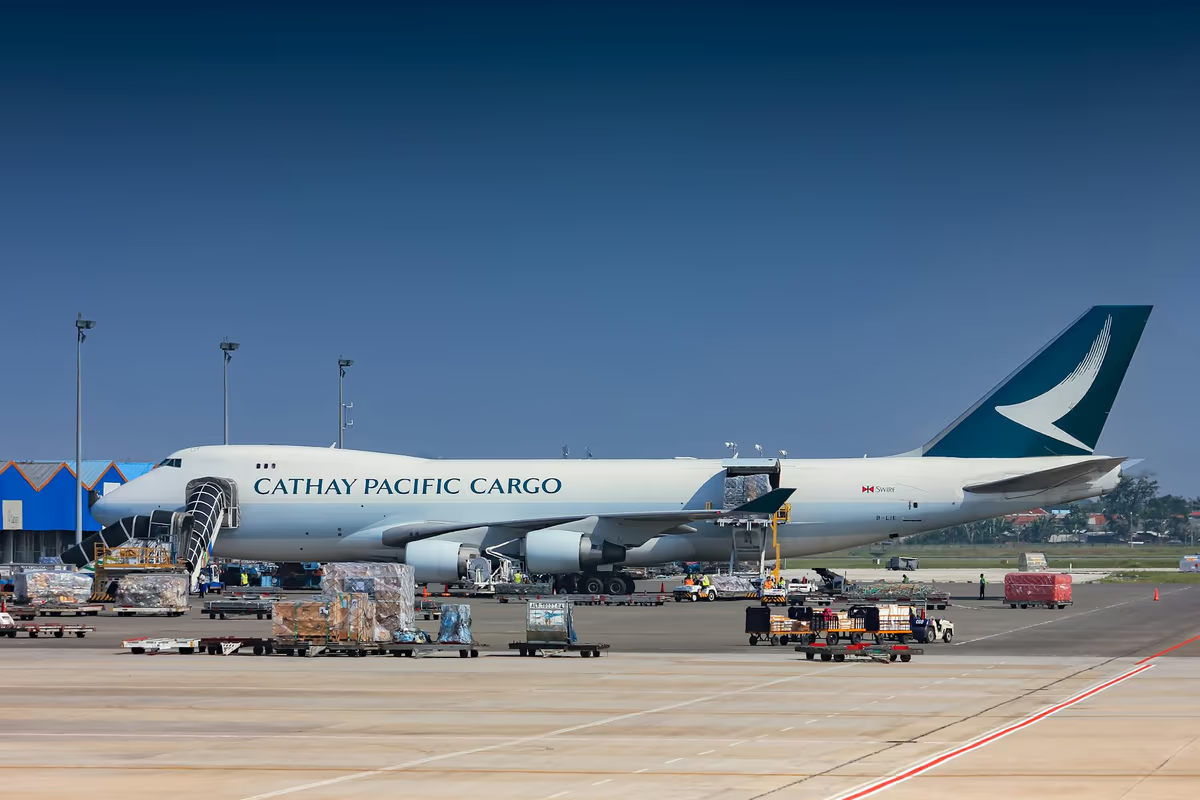
Around one-third of Asia-to-Europe air capacity is normally routed through the Middle East. With key transit corridors restricted, that uplift has dropped sharply, and the wider Asia-Europe air freight market has turned unpredictable. Spot rates are up, space is tight, and ad-hoc cancellations are more common.
Maersk has assembled a set of alternative air and multimodal options to keep cargo moving while the region stays volatile:
- Secured lift via non-Gulf gateways
- Controlled airfreight options through Muscat and Salalah
- Sea-air combinations via Colombo and Oman
- Expanded landbridge connections across Saudi Arabia, the UAE, and the wider Gulf
For Thai exporters with time-critical shipments — electronics, high-value auto parts, fashion season goods, perishables — these reroutes are the practical way forward. Lead times grow by 1 to 3 days against a pre-disruption Gulf transit, but the alternative is missed sailings or missed slots at destination. We examined the underlying shock to the region in our Strait of Hormuz crisis piece and the knock-on effect on Thai exporters in our war-risk playbook.
Customs: EU tightens on small parcels, opens to Australia
Two separate customs signals worth noting this month:
Small-parcel scrutiny. EU customs authorities are intensifying checks on low-value consignments ahead of the summer peak and the next wave of digitalisation reforms. Expect more document requests, tighter data verification, and higher delay risk where product master data is incomplete. E-commerce brands and parcel-driven shippers should clean up classification and descriptions now — before Q2 volumes arrive.
EU-Australia FTA. The EU-Australia trade relationship has entered a new phase with a Security and Defence Partnership alongside a comprehensive Free Trade Agreement. Nearly all tariffs disappear, access to critical materials like lithium and manganese improves, and rules-of-origin benefits open new sourcing options. For exporters based in SE Asia, this matters indirectly: EU importers now have a stronger Australian alternative for several categories (automotive, agri-food, technology), which changes competitive dynamics on shared routes.
For Thai exporters new to EU customs mechanics, our export customs clearance guide walks through the documentation chain end to end.
How Polaris Line is responding
From our Bangkok headquarters and our Dubai partnership with Polaris Shipping Agencies LLC, we are actively managing Europe-bound exposure for our SE Asia clients this month:
- Western Med routing advisories — We are flagging SAMBA omissions to clients at the quote stage, not the booking stage, and pre-negotiating transhipment alternatives via Algeciras, Tangier, and Fos where the primary call is at risk of being skipped.
- Rijeka documentation pre-check — Our customs team is auditing every Serbia-bound booking’s paperwork before the 16 April fee starts, so the EUR 65 per-container charge does not land on a client’s invoice for a reason that could have been prevented.
- Germany dwell-time buffering — Easter-week bookings through Hamburg and Bremerhaven are being quoted with a 24–48 hour dwell buffer built in, so in-DC dates do not slip when terminal labour tightens.
- Asia–Europe air reroute options — We are booking time-critical shipments through Muscat, Salalah, and Colombo, and quoting sea-air combinations via Oman for clients willing to trade 1–3 days of transit for guaranteed slots.
- Landside fuel pass-through transparency — Our Europe quotes name the specific carrier fuel adjustment that drives any Q2 landside variance, so clients can reconcile the charge rather than absorbing it as a mystery line.
What Thai exporters should do this month
- Review Western Med sailings for SAMBA omissions and confirm alternative routings before booking.
- Assume longer dwell times at German terminals through Easter week and buffer your in-DC dates accordingly.
- Avoid the Rijeka fee by auditing your Serbia-bound documentation process before 16 April.
- Re-price landside legs in your EU quotes to reflect the current fuel adjustment environment, and revisit CIF exposures.
- Book air freight early and specifically ask your forwarder about Muscat, Salalah, Colombo, or Gulf landbridge options for any time-critical lane.
- Tighten e-commerce master data if you ship B2C into the EU — the summer enforcement wave is coming.
Your move this quarter
Europe in April 2026 is not a single disruption story. It is a stack of overlapping frictions — weather, infrastructure repair, labour timing, fuel economics, and geopolitics — that each compound the others. For SE Asia exporters, the winning move is not to wait for the picture to clear. It is to plan around specific, named risks on specific, named routes, and to make the small documentation and routing choices that keep cargo moving while competitors are still reacting.
Contact our team to discuss how the April 2026 Europe picture affects your shipping schedule, or to request a tailored review of your Q2 Europe-bound bookings.